Planning a K-12 Gym Project Around the Summer Break in Eastern Oregon
Start your projectA summer gym renovation only works if the floor is ready for the first day of fall sports. An experienced K-12 construction contractor in Eastern Oregon gets there by scheduling backward from that date and protecting every inspection along the way. The plan starts in spring with procurement and ends in August with punch and cleaning windows that custodial teams can count on. District leaders get a timeline they can share with coaches and families without hedging.
The work sequence is familiar, but it only fits if every date is real. Demolition, slab preparation, moisture mitigation, floor installation, line painting, cure times, bleachers, mechanical and electrical adjustments, and final polish all have to stack without gaps. When the contractor lays this out on a single page and commits to decision-by dates, the risk of missing the first game drops sharply, and everyone involved can see where the pressure points sit.
On campus, access control and dust management matter as much as the schedule. The site team sets rigid partitions, negative air for abatement zones where needed, and protected routes so summer programs can continue nearby. With those controls in place early, the gym becomes a defined work area rather than a daily setup challenge, and crews can focus on the sequence instead of resetting the site every morning.
Backward scheduling that locks the finish line first
The superintendent starts with one date at kickoff: the day athletes need the floor. Working back from that date, the team places final cleaning, equipment move-in, line cure time, and floor cure time. Only then do bleacher installs, backboard rehangs, and lighting or sound upgrades go on the schedule. This exercise often moves the start date earlier than expected, which is exactly what protects the end date when something takes longer than planned.
Next, the contractor identifies the inspections and reviews that cannot shift. Those dates become fixed anchors on the schedule. The project manager then adds vendor lead times and submittal durations, so products like the floor system and bleachers are released well before summer. The goal is a plan the board can approve in spring, built on confirmed durations rather than a list of hopes assembled in June when it is already too late to order.
When summer begins, crews arrive with shop drawings approved and materials already on the road. The foreman holds a daily huddle to keep the trades aligned on what happens next. If a task slips, the team pulls a mitigation step from the plan, such as splitting line painting and equipment work across weekends, so the cure times that protect the floor are never shortened to make up lost days.
How a K-12 construction contractor in Eastern Oregon times procurement
In March and April board meetings, the contractor presents a procurement matrix with decision-by dates for the floor system, bleachers, and hardware. The district sees who must approve each item and when. Early releases are prepared for long-lead components so shop drawings are approved before school lets out, and nothing critical is still waiting on a signature in June when crews are ready to start.
The project engineer coordinates submittals with the architect and manufacturers. Moisture mitigation products, adhesives, and finish systems each require specific approvals, which the team secures before orders are placed. When questions come up, the contractor arranges quick calls with vendors instead of letting emails sit for a week. That attention keeps small questions from turning into schedule problems that land in the middle of July.
By late spring, delivery windows are on the calendar. The team confirms a staging plan that keeps pallets off the slab until temperature and humidity are under control. With materials secured and approvals in hand, the summer window stays focused on construction rather than procurement, which is the only way a tight gym schedule holds together from the last day of school to the first practice.
On-site sequencing that respects cure times and the craft
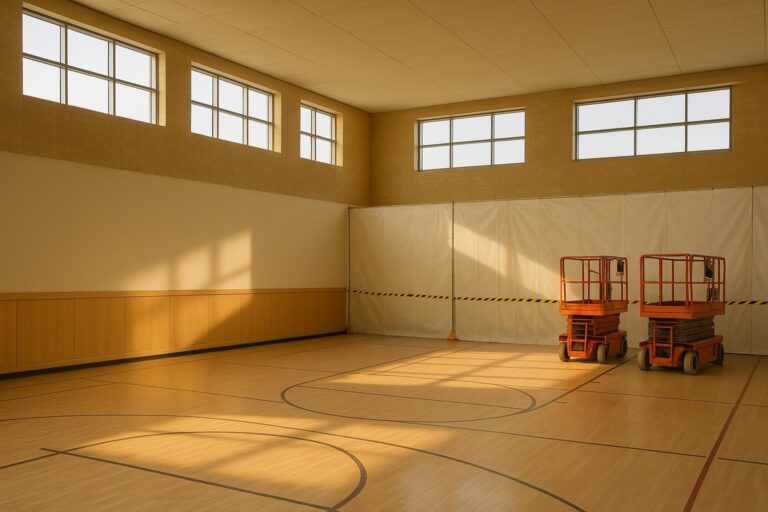
Demolition and slab preparation come first, with close attention to moisture testing and mitigation. The superintendent schedules tests early in the sequence to avoid surprises after the floor arrives. If the readings push the plan, the team adjusts immediately rather than discovering the problem after lines are painted. Dust control stays tight throughout, so nearby summer programs and offices are not affected by the work.
Floor installation follows the manufacturer’s guidance without shortcuts. Crews maintain temperature and humidity, and the foreman logs those readings every day. Line painting is coordinated with athletics staff to confirm markings, then cure windows are protected with barriers and signage. Bleacher crews enter only when the floor is ready for them, never earlier just because another trade is waiting on the schedule.
Mechanical and electrical adjustments and equipment rehangs are scheduled late but before final cleaning. Lighting, the PA system, and scoreboards are tested the way the gym will actually be used during games and assemblies. Custodial teams then get a dedicated window to deep clean without working around trades. The floor is turned over in the condition it will be played on, with nothing left for coaches to report.
Updates and inspections that keep everyone informed
Weekly updates go to the superintendent and athletics staff with photos and a short note on what comes next. The contractor keeps these brief and specific, which makes them easy to share with coaches and families. If a cure time shifts, the message includes the new date and what stays on track. That steady flow of information prevents rumors and builds trust with the people waiting on the gym.
Inspections are booked early and confirmed a week ahead. The contractor walks the gym with facilities staff to catch small items before inspectors do. Punch work is organized by zone, and custodial cleaning begins as each zone is finished. Equipment move-in follows a route that protects the new floor from carts and dollies, with mats laid down before the first load comes through the door.
When the calendar reaches opening day, there are no surprises left. Coaches walk into a gym that is ready, and the district sees a plan that worked from the spring board meeting to the first whistle of the season. That result is what makes the next summer project easier to approve, because the board has seen the method deliver once already.
Frequently asked questions
What happens if moisture tests show the slab is not ready?
Plan for mitigation as a contingency in the schedule from the start. If tests come back high, the team carries out the mitigation step immediately and adjusts the downstream tasks. Early testing and preapproved products keep this from becoming a crisis in late July, when there is no time left to absorb it.
Can bleacher and floor work overlap to save time?
Only with strict protection and coordination, and it is usually not advisable. The risk to the new floor and the need to respect cure times make overlap a last resort. A K-12 construction contractor in Eastern Oregon should recommend releasing materials earlier and protecting the sequence instead.
How do we keep summer programs running during gym work?
Define protected routes and set rigid partitions before school lets out. Schedule loud work for mid-day windows and escort deliveries through campus. Clear signage and weekly updates help summer staff move confidently around the work area, and they give program leaders a single contact for questions.
Districts do not have to gamble on a summer sprint. McCormack brings a backward schedule, tight procurement, and superintendent-led execution that deliver gyms ready for fall sports. For a district considering a summer upgrade, McCormack can map the path now, while there is still time to order materials and lock in the dates.
Start Your Project
Bring us the program, the site and the date. McCormack builds schools, public facilities and commercial projects across Eastern Oregon with superintendent-led execution, and we will come back with a realistic plan for budget, schedule and phasing.