

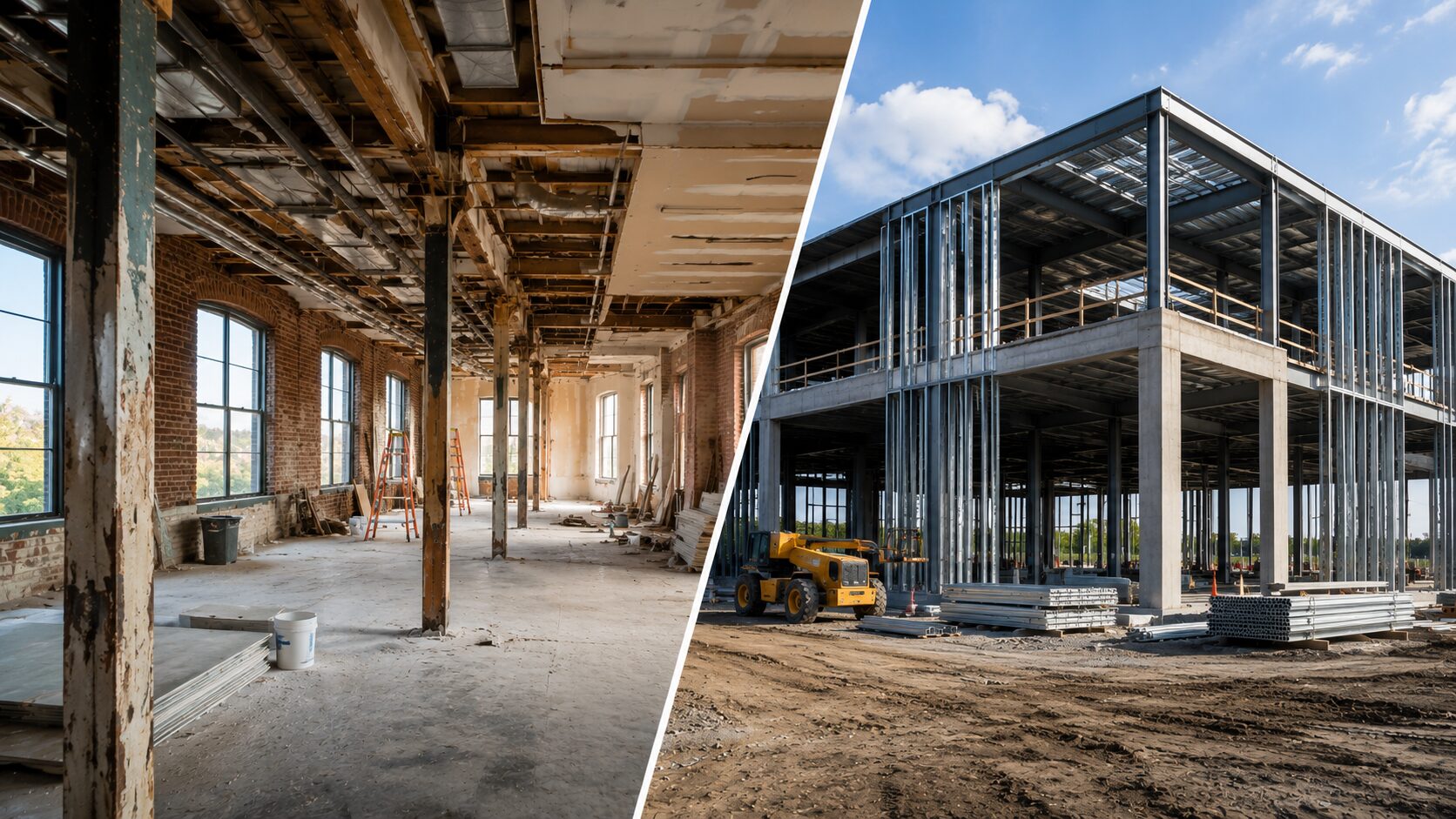
15 Jun Renovation vs. New Construction: How to Decide for Commercial Projects
One of the first decisions in any commercial project is whether to renovate an existing building or start fresh. Each option has advantages, and the right choice depends on project goals, site conditions, and long-term plans. Making that decision early, with a clear understanding of real conditions, helps avoid costly pivots later in the process.
Understanding the Existing Building and Its Constraints
Renovation begins with a thorough evaluation of what already exists. On the surface, a structure may appear usable, but deeper analysis often reveals limitations that affect cost, schedule, and feasibility. Structural integrity is a key starting point, along with the condition and remaining life of systems such as HVAC, electrical, and plumbing. Code compliance also plays a major role, as older buildings may require significant upgrades to meet current standards. Key factors to evaluate include:
- Structural condition and capacity
- Age and performance of major building systems
- Current code compliance and required upgrades
When these elements are not aligned with the intended use, renovation costs can increase quickly. What begins as a simple upgrade can shift into a more complex project if hidden issues surface after work begins.
Comparing Cost, Schedule, and Design Flexibility
At first glance, renovation often appears to be the more cost-effective option. However, that assumption depends heavily on the condition of the building and the level of change required. Unknown conditions behind walls or under floors can introduce additional costs and delays that are difficult to predict early on. New construction, on the other hand, offers a higher level of control. With a clean starting point, teams can plan more accurately around budget, schedule, and sequencing. New construction typically provides:
- Greater predictability in cost and timeline
- Fewer unknown conditions during construction
- More flexibility in layout and design
The decision ultimately comes down to how much uncertainty a project can accommodate. Renovation may be viable when the building is in good condition, but new construction often becomes the more efficient path when major changes are required.
Aligning the Decision With Long-Term Use and Performance
Beyond initial cost and schedule, the decision should reflect how the building will function over time. The way a space is used daily has a direct impact on whether renovation or new construction is the better fit. Renovation tends to work well when:
- The existing layout already supports operational needs
- The structure can accommodate updates without major changes
New construction may be the better option when:
- Significant layout or workflow changes are needed
- Modern systems and infrastructure are required
Long-term performance also plays an important role. Maintenance requirements, energy efficiency, and the ability to adapt the building in the future should all be considered. A lower upfront cost may not deliver the best value if the building is difficult to maintain or lacks flexibility as needs evolve.
Making the Right Choice Early
Choosing between renovation and new construction is not just a design decision. It is a strategic one that affects every phase of the project. Evaluating conditions early, aligning scope with long-term goals, and understanding real costs help ensure the final decision supports both immediate needs and future performance.
At McCormack Construction, we work closely with clients to assess both options with a practical, experience-driven approach. By looking at the full picture from the beginning, we help projects move forward with clarity and confidence.